now playing @ n5Radio: Bitcrush - Post listen

Last DaysThe Safety Of The NorthCATMD166

Last Days - The Safety Of The North
Last Days
The Safety Of The North
Format : CD / Digital
Catalog# : MD166
the city failed
may your days be gold
new house
fracture
thoughts of alice
run home
life support
your silence is the loudest sound
this is not an ending
the fields remember my father
missing photos
nothing stays the same, nothing ever ends
you are stars
blue and white flowers
onwards

Graham Richardson's Last Days project returns with it's latest full-length The Safety of the North. Richardson has fully embraced his cinematic tendencies, expanding his creative palette to include spoken excerpts, a vocal collaboration with Fabiola Sanchez of Familiar Trees, and a "script-based" compositional approach. Drawing on a theme first explored in Sea's "Arrival at Jan Mayen" (in which its sailor is first excited by the prospect of a distant island home, then disappointed by its barren terrain), The Safety of the North tells the story of Alice, her parents and their relocation to a remote northern land. Disappointed with the trappings of the city, they wish for a simpler, more rewarding way of life. Their arrival promises clean air, miles of snow covered fields surrounded by forests and mountains but above all, safety and a protected existence. As dark as it is light, the Safety Of The North explores relationships, loss, recovery and how hope is the only certainty in life.. With a strict script in mind, Richardson divided the album into 15 "scenes," scoring each with a new focus on the emotional states of his characters and the settings they inhabit. Using the same tools he employs on his previous albums (i.e. field recordings, song titles, and album art), along with snippets of dialogue, monologue and more diverse instrumentation, Richardson guides the listener through Alice’s initial departure, hopeful beginnings and eventual tragedy in what may be Last Days most melodic work to date.

Other n5MD releases fromLast Days


Last DaysThe Safety Of The Northpress

[sic] magazine

A third album in almost as many years, few can accuse Graham Richardson of resting on his laurels, though it must be pointed out, and ‘The Safety of the North’ confirms it, the ambition and scope of his Last Days recordings increases in tandem with his consistency. “Safety…” finds Richardson broadening his horizons once more both musically and thematically. The former sees the addition of beautiful folk and dreamy post-rock touches to his already considerable palette, while the story behind this record is far less ambigious concerning that of its central character ‘Alice’ who, along with her family, move from the disappointment of the city to a rural, potentially more fulfilling life. A brave concept indeed, given the fact that Richardson creates predominantly wordless music. That he conveys the required emotions, for the most part, using subtle field recordings, song titles, artwork and the strength of his songwriting makes it all the more remarkable. It also leaves each of the 15 ‘scenes’ on the record open to interpretation, its possible to participate and withdraw differing emotional nuances with each listen. ‘The City Failed’, with its tolling bell-like strokes and shimmering harmonics sets a tentative introductory tone, perfectly conveying the wonderment and hope when moving to pastures new. These sentiments are further augmented by the Vashti Bunyan folk stylings of ‘May Your Days Be Gold’, which features Familiar Trees’ Fabiola Sanchez on guest vocals urging us to think ‘of what lies ahead / making real all the tales you’ve read’. This line encapsulates the hope and wonderment one experiences in fresh surroundings. From there the beautiful ‘Fracture’ follows, its title alluding that all may not be well in Alice’s life, but the heart-breaking harmonic Eluvium-like shifts suggesting otherwise. “Run Home” wanders in a little later, a bona fide Last Days classic, unspooling from its early sedate state into a passage strongly reminiscent of Mogwai’s more introspective moments. It’s equally as heart-warming too and, hard to believe, the work of one man.

The next run of tracks, including the grainy, tick-tocking “Life Support” and the murky, contemplative “Your Silence Is The Loudest Sound” hint towards a family bereavement or traumatic experience in Alice’s life, which appears to be confirmed later in “The Fields Remember My Father”, with its crystal clear field sounds conjuring subtle imagery along with a brooding piano/glockenspiel duet. This ratchets the tension somewhat, allowing the listener’s empathy towards Alice to reach boiling point. A clever rouse too, for Richardson now has your undivided attention, hooked and reeled. It’s at this point he hits us with the elegiac whammy of “Nothing Stays The Same, Nothing Ever Ends”, which develops from an enveloping melancholia, lifting much of the apprehension and malaise of the previous few numbers with a release of mountain-sized melodic energy that can only be described as cathartic.

‘You Are Stars’ closely follows, with its apt nocturnal atmosphere and twinkling tones, giving a sense that Alice is once again ready to think towards the future. As ‘Blue and White Flowers’ rolls through you can almost taste the hope advancing again. Its towering strength returning with each passing second, until we reach the finale fanfare march of ‘Onwards’. There are no track titles or imagery needed here; Alice is walking with deliberation, hoping towards the future. As this quite marvelous journey reaches its pinnacle it struck me how much I had invested in this record, from its hopeful beginnings, to the apprehension I felt when things didn’t seem right, through to the overall empathy or hope I felt towards Alice. This is clearly down to the strength of Richardson’s writing, an ability that has the listener wrapped in the intricacies of his ‘script’ much like that of a film.

It’s true to say that this is his most accessible record, with many of the abstracted edges of previous efforts either smoothed or streamlined, but it’s by far his most challenging and far-reaching concept. Like previous Last Days outings, hope is the prevailing emotion. Either testament to its strength or the fact it is arguably the only constant emotion in life. On ‘The Safety of the North’ it radiates stronger than ever. “We’re all in the gutter” Oscar Wilde once famously said “But some of us are looking at the stars”. It’s clear in which bracket Graham Richardson belongs.
de:bug

Graham Richardson hat uns schon zwei Alben auf n5MD geschenkt, aber nie war seine Musik so reich an Farben, Tiefe, Überraschungen und Zusammenhalt. Und sogar ein übergreifendes Thema hat das neue Album. Erzählt wird die Geschichte einer Familie, die die Stadt verlässt und auf's Land zieht. Um Gottes Willen, ein Konzeptalbum? Nein, überhaupt nicht. Die Stücke sind per se schon so funkelnde Kleinode, dass man sich gerne mit den urbanen Flüchtlingen auf die Reise macht und mit dem Cover in der Hand nach Referenzen zwischen Songtiteln, Samples und Fortschritt des Umzugs sucht. Man taucht tief ab in die unglaubliche Musik, die, fast komplett akustisch, nur von einigen Field Recordings, Erzähl-Schnippseln und sanfter Elektronik zusammengehalten wird, sich mit kurzen Spitzen aus dem Shoegazing immer wieder selbst aus dem Straßengraben zieht und uns mit ihren auf Wohlklang gebetteten Sounds umschmeichelt. Hier passiert es dann. Wenn Bands wie Sigur Ros auf überproduzierte Effekthascherei setzen, bläst uns der Wind bei Last Days die Wahrheit und die Essenz von Musik wie von selbst ins Ohr. Das ist wichtiger als alles andere.
cokemachineglow

Time for the first n5MD of the year—but before the meek start raising their arms up and fleeing in fear of a scrunch-party, check both hands and count to ten: the Californian cabal isn’t just a hangout for flagging Aphex Twin types. Since its inception, they’ve strived to deliver an equilibrium of serene ‘scapes and groundbreaking cyborg sizzlers, last seen in action shortly before Christmas. This time, though, with LP#3 from the reclusive Graham Richardson—a prodigal bygone Geordie who put “ambient pioneer” on his green card—they’ve slipped into the far reaches of the former, counting down his Last Days projects with a sensual and more melodic aplomb: 3 (taking us swimming for 2006’s Sea), 2 (drying us the folk out on These Places Are Now Ruins [2007]), 1, and lift-off into The Safety of the North, a shiny biosphere of assorted soundtracks and his most tightly mapped opus to date.

Richardson here presents fifteen cues for a film that’s being privately projected; if you’ve ever been uprooted midway through childhood then ...North will strike a bittersweet chord with you: it relates the story of Alice, a carefree kid from the bad city blocks who’s tested when her family goes rural. So far so saccharine, but Richardson’s grasp of the wobbliness of young expectation and his finishing skills as a producer give life to his alter-biography, the whole thing unfolding like a redux of Lynne Ramsay’s much ignored Ratcatcher (1999). From the genteel post-rock of the opening track—think Explosions In The Sky on milk and cookies—through to “Onwards”’ Icelandic shutdown, Richardson devises the perfect adult to lead every lost child by the hand. You’ll never have to leave home again, I promise (not until the real bad adults rock up with a red writ and court order, that is).

What earmarks The Safety… as proper prize-winning poetry and not just an hour and six minutes of syrup is its bejeweling with perfect detail: it’s a struggle to hear this and stop oneself slipping into personal layers of reverie. When the concentrating five-year-old lists her notions of the Arctic on “Thoughts of Alice,” our own thoughts won’t wonder much further—the Northern Lights, midnight sun, fifty thousand islands. The way a grown-up pulls her up on her mispronunciation of “artic circle” is spot-on—a parent wanting their child to soar, the kid itching under the weight of wax wings. The fragile “May Your Days Be Gold” meets these worries with reason, and the feminine ether of “Brand new footprints on this land / Touching colours with your hands” paints migration as a faint flock of faeries. As might be deduced from the record’s title, the project is steeped in an eerie fog, one that glows white on the static tracks like “Your Silence is the Loudest Sound.” As bass notes hiss on a blanket of tundra, it’s easy to imagine the crunching under your own feet as you patrol your new stomping ground. Alice’s adjustment seems fraught with uncertainty, and Richardson factors her doubt into his idents.

Where most soundtracks fall is the recycling of a singular theme but there’s nothing so terminal on Last Days—more charged cues lurk round every corner, with the rousing “Fracture” using household chords in proper orbiting proportions. The difference here is the troops are remembering purity while being stirred by the Hans Zimmer soundscapes, and that’s what wins you over. It’s difficult not to connect with The Safety of the North; it truly is. In one way it’s a huge helping of snowblind delight, cubes of brilliance flashing the way Ulrich Schnauss used to. In others, it’s something more perilous: a wide, rumbling desert becomes submarine beauty (“You Are Stars”) becomes crickets rattling like a bicycle cigarette card (“Blue and White Flowers”). Childish, perhaps, to leap from one mood to another, but no more childish than, say, putting aniseed under your pillow at night to shrink down the chances of nightmares. Richardson reminds us that these lost tinges of innocence are still inside us, often filed in error under naivety. What he says with his third album is that hope can travel with you. It’s portable. You’ll find it in the tiniest detail, like the smell of a new set of stairs.
cyclic defrost

Graham Richardson’s penchant for electronic transformation and deliberate distortion becomes like a sky stung with sudden gusts of harmony and wisps of melody on his third full-length work, The Safety of the North. A brunt of the change seems owing to Richardson’s decision to bind the structure of the music to that of a traditional narrative, with a clear beginning, middle, and end. This helps him better avoid forcing a glut of fragmented ideas and instrumental styles together, with few, if any, ultimately coming across as distinctly his own.

It’s a clear step forward, then, as Richardson moves further away from pussyfooting around with vaguely pre-determined sound structures and styles and connects with something that feels more personally sourced, something that, in retrospect, his past works always nudged at, but never quite brought out. There is a stronger immediate comfort in Richardson’s playing, particularly when he’s dotting the mise en scene with will-o-wisp melodies, low, groaning guitars, and flickering digital firefly sounds.

The inclusion of vocal contributions from a small clutch of singers adds to the emotional shading and unicity of the compositions. Stepping down from her duties in Familiar Trees, vocalist Fabiola Sanchez lends a certain grace to the finger-picked guitar, water-drip keyboard lines, and clunky rhythm of “May Your Days Be Gold”. On one of the albums most charming and effective pieces, “Thoughts of Alice”, Neamh Rose Breen’s child-like spoken-word gambit, set against a solemn organ refrain and cool atmospherics, lends the piece a portentous feel. Its promises are made good through the remaining pieces, a series of elaborations and extensions on these unresolved sentiments, which make this Richardson’s most accomplished work yet.
textura

In his use of a “script-based” narrative, Graham Richardson brings an inspired conceptual approach to his third Last Days full-length, The Safety of the North. Each of the fifteen tracks represents a separate scene in a larger story that's about the relocation of “Alice” and her parents to a remote northern land. Rejecting city life, the family longs for a simpler lifestyle, one filled with clean air, natural surroundings, and safety. With the tracks also scored to reflect the varying emotional states of the characters and the settings they inhabit, it hardly surprises that the album encompasses a broad stylistic range yet the story conceit—in formal terms, Alice 's story is a classic bildungsroman, though one of narrow temporal scope—helps bridge the disc's settings. In short, hanging the tracks on a narrative clothesline turns out to be a clever move as it brings continuity where it might be lacking on sonic grounds, and Richardson's decision to include vocals and speaking voices (Clemmie Law, Jodie Davis, Neamh Rose Breen, Fabiola Sanchez) is also wise, given how much such elements enhance the material. Song titles make the story easy to navigate: “Life Support” suggests that the death of Alice 's father is imminent, something the later title “The Fields Remember My Father” appears to confirm. After despairing over the impermanence of life, the young protagonist recovers and looks with hope upon the days to come (“Onwards”).

There are some beautiful pieces on the album. With its paired guitar motif and metronomic bass line, “The City Failed” makes for a perfect opener, its steady tempo and ponderous mood setting an elegant stage for the story's unfolding. When sounds of thunder and rain and the girl's speaking voice (“We'll be there soon, all of us, in the safety of the north”) appear, it's easy to visualize the family driving through a remote forest as it makes its way towards its new home in the rural north. Immediately following, “May Your Days Be Gold” adds a lovely vocal from Familiar Trees' Sanchez (“Thinking of what lies ahead…”) to a delicate “folktronic” base of acoustic guitar and piano. The album is filled with evocative instrumentals and elegiac settings that draw upon shoegaze, ambient, and post-rock (e.g., “Missing Photos,” “You Are Stars”). “New House” exudes the wonder of discovery and surprise a child experiences entering a home for the first time, while “This Is Not an Ending” and “Nothing Stays the Same, Nothing Ever Ends” are quintessential Last Days tracks: stirring meditations of electronic tones, piano, and strings augmented by corroded waves of guitar-generated noise. Field recordings effectively contextualize the material too: cawing crows and the crunch of footsteps transport the listener into the setting during “The Fields Remember My Father,” and Alice is heard riding her bicycle and ringing its bell during “Blue and White Flowers,” making it easy to imagine her exploring the countryside while church bells toll in the distance and birds chirp around her. Three albums into his Last Days project, Richardson maintains the high standard set by the first installments with this rich third. The sixty-five-minute collection merges field recordings, vocal elements, acoustic instruments, and electronics into a narrative whole that's never less than engaging and often powerfully affecting in its humanistic character.
bears eat people

One of the toughest things to do when you’re trying to describe records that rely so heavily on conveying an emotion to the listener in a manner that’s virtually devoid of the typical lyrical delivery system is putting how it makes you feel into words. I often worry about being repetitive and hate that because the last thing I want to do is give you, the reader, the impression that my reactions to the music are cookie cutter responses that I think I am ’supposed to’ be having. I assure you though, this is not the case. Never would I tell you something was moving and beautiful if it wasn’t; like I said, it’s just tough to find the perfect words sometimes. All that because I feel like this will be another one of those times.

I have been following Last Days for several years now, and each release has been superb. ‘The Safety Of The North’ is no different. Perhaps the most sonically accessible release to date, with this record Last Days (or Graham Richardson) once again intend to provide a cinematic soundtrack for a story that not only exists within the walls of these 15 fantastic tracks but can extend on endlessly with the only limits being those imposed upon yourself. This time around, the story being told is that of a young girl named Alice who, along with her family, is moving out of the city to, well, the safety of the north. In these songs, each of which is intended to play out as a scene in the story, you’ll follow the trials, tribulations, and thoughts of young Alice as she tries to adapt to her new surroundings. It’s masterfully done too, so much so that I dare you to listen to songs like ‘Run Home’ and ‘You Are Stars’ and not immediately conjure up the visuals to accompany this soundtrack in your mind. Painful and tragic but innocent and hopeful, the story of Alice is eloquently told by an artist whose talent shines brighter with each release. I wouldn’t pass this one up, folks.
etherreal

D’ordinaire peu attirés par les albums-concepts, ceux qui sont censés nous raconter une histoire, nous avons souvent l’impression qu’ils mettent trop en avant leurs intentions au détriment de toute exigence purement musicale. Dès lors, quand on apprend que le troisième album de Last Days (déjà auteur de deux disques appréciés de ces pages) a été écrit pour rendre compte du déménagement d’Alice, petite fille qui suit ses parents mutés vers une ville nordique, c’est avec une certaine attente mêlée d’appréhension qu’on place le CD dans le lecteur.

La présence de voix féminines tout à fait mignonnes sur les deux premiers titres de The Safety of the North (respectivement Clemmie Law et Fabiola Sanchez) viennent renforcer nos légères craintes, sursignifiantes qu’elles sont par leur délicatesse ostentatoire. Plus loin, on aura le droit à l’énoncé des pensées d’Alice, narrant de son innocente voix d’enfant ses différentes découvertes (Thoughts of Alice). Fort heureusement, sur le plan instrumental, les lignes chromatiques de guitare tracées par Graham Richardson font preuve d’une grâce suffisamment contenue pour ne pas en rajouter, tout en étant parfaitement en adéquation avec l’ambiance mélancolico-apaisée de l’ensemble.

Parfois, une batterie fait son intervention, emmenant le propos vers des rivages proches d’un certain post-rock (Fracture, Run Home, Onwards). Plus encore, le musicien anglais démontre qu’il est tout à fait capable d’installer une texture légèrement bourdonnante avant d’y ajouter, petit à petit, une mélodie de guitare et la batterie (Life Support), ou de mettre en place une nappe allant crescendo et intégrant progressivement quelques saturations (Nothing Stays The Same, Nothing Ever Ends). Contrepoints impeccables des morceaux auxquels participent des voix féminines, ces titres font la richesse d’un album qui confirme le talent de son auteur.
SF Bay Guardian

Keep your best headphones handy -- you're going to want them for spins of The Safety Of The North, the third and most recent full-length release from Edinburgh, Scotland-based Graham Richardson and his ambient/electro-folk Last Days project. As ominous as the artist's AKA might be, the disc is nowhere near as fearful or nightmarish as one might expect. Rather, the music found here is intimate and ruminative, frequently glowing from ripples of electronics and shoegaze-y guitar textures. Delicate acoustic finger-picking and understated piano meditations add further flair to these largely-instrumental womblike pieces, and the occasional insertion of the human voice into the mix helps immensely in making this a thoughtful, emotional listen.

And while the proceedings sometimes veer towards melancholia, it's a strangely comforting, sit-around-and-ponder-on-a-grey-day stripe of melancholia we're talking about here -- a little maudlin and wistful, yes, but ultimately cathartic in the end. Even the cold chills which bluster forth from the disc's lower register from time to time offer their own curiously cocooning sensations to the listener -- especially with the help of a good pair of headphones. The Safety Of the North is something worthy of surrender -- of succumbing to its many hums and whirrs and whipping auroras of shimmering light.

There's a back story to the album, though it isn't required knowledge for appreciating its many charms: Richardson composed these 15 songs around the themes of of change, struggle, and hope. Specifically, it concerns a young girl, Alice, and her family. Disenchanted with city living, they decide to “move north” (the Arctic Circle, judging from a couple of contextual clues provided along the way) to find a simpler, quieter day-to-day life. Such major upheavals usually don't come about without their share of challenges, however. Thus Richardson has constructed a story-arc which from sadness to hope to struggle to sadness to hope once again. More or less so, anyway. Again, since this is mostly an instrumental recording, the itinerary on this emotional journey is up to the listener, I suppose. Still, the prevailing themes of The Safety Of The North -- change, struggle, hope -- remain palpable, even without too much assistance from lyrics. Forgive me for trotting out the “cinematic” tag (I know that the label gets used quite regularly for any sort of wordless music which manages to create vivid, stirring images) but it honestly does apply to Richardson's music. Even if concrete images fail to come to mind, the creation of particular moods is tough to miss.

So, what does it sound like? The list of influences and touchstones should widen the eyes of any fan of brooding sonic textures and gentle noise: elements of composers Henryk Górecki and Erik Satie appear from time to time, as does the otherworldly ambience of Brian Eno. Then there's the occasional launch into crescendo-building intensity we've come to expect from Sigur Ros, for example, or perhaps even Explosions In The Sky -- albeit with considerably less guitar-punishing bombast, however. With its many strata of oscillating hums and whirls, a host of other moodmakers come to mind: My Bloody Valentine, Slowdive, Cocteau Twins, M83, Múm, Ulrich Schnauss. Plenty of moments here evoke that “classic 4AD Records sound” of the '80s and early '90s, thanks to the dazzling juxtapositions of darkness and light strewn throughout the disc. Remember those This Mortal Coil records, wherein everything sparkled and shimmered and tossed luminous spirals against the walls of the darkened fortress of your bedroom? Take away all of those guest vocalists, and the contents would probably resemble much of The Safety Of the North.

Things start off tentatively, carefully, hopefully. Disc opener “The City Failed” uses bell-tolling guitar strums against a slow-climbing build of atmospheric buzz to convincing effect, having simulated the heightened expectations of the traveling family as they begin their epic journey north. Eventually, the keyboards recede and a thunderstorm rolls in; a cold rain pours down, and low murmurs of electronics return to throw some warm light onto the puddles. “We'll be there soon, all of us, in the safety of the north,” a young girl recites calmly, assuredly. The line's delivered with such conviction that it's worth a shudder or two to contemplate what they be running from in the first place. The song immediately segues into “May Your Days Be Gold”, an achingly lovely ballad sung by guest vocalist Fabiola Sanchez of Familiar Trees. The combination of fragile acoustic guitar picking and Sanchez's sighing, almost-childlike voice brings to mind the work of Vashti Bunyan, or perhaps Shelleyan Orphan. It's a quietly forceful, impassioned plea to keep in mind “what lies ahead/ making real all the tales you've read.” Exquisite.

“New House” heralds the arrival of the relocated family with an alluringly clip-clop rhythm -- slightly off-kilter and imitating the putter and grind of an antiquated machine, maybe -- paired with a field recording of playing children. It's easy to envision the family settling in to their new rural home, feeling optimistic about what's to come. Or maybe they haven't settled yet, and this is merely a stopping point on the way? For all of its moments of comfort, there remains something tentative in the air. “Fracture,” as the title suggests, retracts much of that sunny attitude, with its chiming guitar tones and somber keys gradually snowballing into a tense rumble of thickly-layered harmonics and thumping brushed drums. Even without fully crossing over into rock-theatrics territory, the song swells with all of the bluster of an Explosions In The Sky composition. “Thoughts Of Alice” is truly mesmerizing -- the young girl recites a list of everything she expects to see in the Arctic, while a mist of keyboard patterns rise and fall.

The mist gives way to an eerie fog on “Run Home”, and its wistful piano opening is worthy of Sigur Ros comparisons. As the track rolls and pushes along, gentle squalls of treated guitar soar overhead--- very Slowdive, very Robin Guthrie (Cocteau Twins), and entirely rippled with strange luminescence. Having thus given a glowing display of the Northern Lights at their most awe-inspiring, the disc then moves into less overt pyrotechnics: the circular chimes and playful scampering rhythm of “Life Support” would probably evoke Múm, if it were not for the foreboding rumble of what sounds to these ears like a life-support system.

“Your Silence Is The Loudest Sound” is ravishingly icy, with Eno-like electronic murmurs and sputters forming a remarkable imitation of the frozen north. Further trials and pitfalls appear deeper into the disc, but The Safety Of The North ends with a particularly gorgeous -- and rather optimistic -- touch with “Onwards.” Opening with the gurgles of a rushing stream and the call-and-response of countless birds, the track carefully, incrementally adds layers of synth, xylophone, and guitars to a pulsing martial beat--- soon enough strings and horns (or, I'm guessing from the liner notes, an impressive electronic imitation thereof) join the crashing, cascading mix. Misty-eyed majesty, certainly, and a potent end-note for Richardson.
ondarock

A due anni di distanza dall’estatico “These Places Are Now Ruins”, Graham Richardson aggiunge un terzo tassello alle sue mutevoli esplorazioni ambientali, indirizzate stavolta verso un nord immaginario, richiamato nel titolo ma anche nelle composizioni, mai così suggestive e dischiuse a suggestioni tanto impalpabili quanto di pronta e immediata fruizione. “The Safety Of The North” si presenta come l’album più lungo e complesso di Richardson, con le sue quindici tracce e oltre un’ora di musica; si tratta al contempo di un lavoro molto articolato, che insiste sul medesimo percorso di addizione e apertura a nuove sonorità che già caratterizzava il disco precedente, in relazione alla spessa imperscrutabilità dell’esordio “Sea”.

La maggiore apertura si sostanzia qui in una più decisa impostazione elettroacustica nella quale, accanto a flutti ambientali mai così eterei e incantati, affiorano in superficie melodie acustiche non più filtrate dall’elettronica, modulazioni da colonna sonora placide e sognanti e persino una vera e propria canzone, “May Your Days Be Gold”, impreziosita di ulteriore dolcezza dalla voce di Fabiola Sanchez dei Familiar Trees, che qualcuno ricorderà già dall’ottimo album di RF & Lili De La Mora. Se appunto la presenza di un brano cantato rappresenta una novità assoluta nei lavori di Last Days, è almeno tutta la parte iniziale di “The Safety Of The North” a mostrare un incedere tiepido e sognante, nel quale le stratificazioni tra distinte note acustiche e fondali da raffinatissima ambient orchestrale disegnano brani dall’aspetto solenne e dai toni decisamente smussati. Accanto alle immersioni in liquide profondità ambientali dai tratti notturni, ancora solcate da note pianistiche e – nella sola “This Is Not An Ending” – da residue distorsioni elettriche, sono invece numerosi i passaggi in cui il nord evocato dal titolo si congiunge con quello emozionante e onirico dei Sigur Rós, sovente evocati nei loro momenti più rarefatti lungo molti brani dell’album e in particolare nell’esile romanticismo della conclusiva “Onwards”.

La struggente malinconia che contraddistingue i titoli delle canzoni indica mestizia e raccoglimento interiore. Esempi come “Your Silence Is The Loudest Sound” o “Fracture” sottolineano con chiarezza questo concetto, concretizzando le impressioni attraverso un impegno contenutistico mirabile. In entrambe le composizioni il docile svolgimento della melodia rende impalpabile il tempo e il suo scorrere, spargendo scintille di emozione con la solita classe. Non si può certo parlare di “stile Last Days”, tuttavia non v’è dubbio che nel corso delle sue tre opere Graham Richardson abbia messo a punto una formula mutevole dal sicuro successo fra gli appassionati. Non schematizzazioni imbolsite e furbescamente riproposte, ma uno spirito applicato alla fantasia, un profondo rispetto per la serietà artistica. Abnegazione e incanto sovente colgono l’ascoltatore senza preavviso (i contrappunti invisibili di “The Fields Remember My Father”, la grazia lirica dell’imponente suite “Missing Photos”), una docile ma acidula sensazione di solitudine traspare con prepotenza nel finale (l’elegiaca “You Are The Stars”, ma soprattutto la silente “Blue And White Flowers”).

Nonostante l’eterogeneità dei quindici frammenti, la sensazione dopo svariati ascolti è quella di confrontarsi con un unicum sorprendente, una opera compatta e uniforme, un monolite da vivisezionare in ogni sua sembianza con cura e perizia. Non sappiamo se ciò corrisponda all’intenzione dell’autore, in ogni caso il piacere sublime che promana da “The Safety Of The North” è in grado di trasportare in uno stato di immedesimazione empatica rara e accogliente. Proposito quanto mai ambizioso, ma appropriato per i cuori più adusi a questo tipo di percorsi e pure per quelli meno preparati, condotti per mano con sapienza attraverso territori immaginari di grazia avvincente.

Last DaysThe Safety Of The Northcomments

6 comments so far (post your own)

subLAD posted this comment on Wednesday, 01.7.09 @ 20:53pm

breathtaking.

Cut posted this comment on Sunday, 01.25.09 @ 14:51pm

this is so beautiful....trully amazing work:)

ethereal alex posted this comment on Tuesday, 01.27.09 @ 12:33pm

have to admitt that this is a highly emotional work with strong points really looking forward to this release being a fan of near the parenthesis this is the strongests compositions i 've heard since l' example from N5md

babulski posted this comment on Saturday, 02.21.09 @ 13:55pm

so deep ... I'm speechless.

BlaftA posted this comment on Friday, 04.10.09 @ 15:09pm

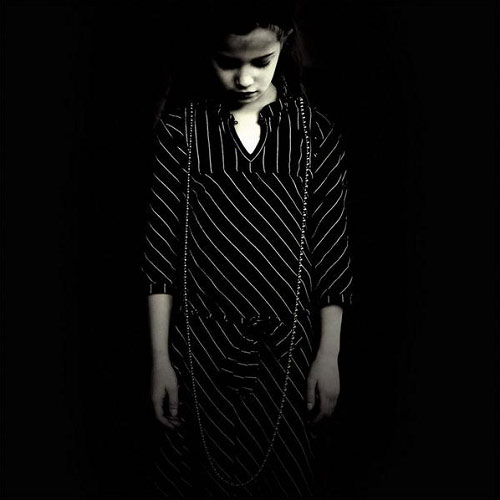
Wow, what a fantastic album, who is the girl on the cover, very beautiful album-art.

Pyrmo posted this comment on Monday, 05.4.09 @ 23:04pm

Superb

leave a comment

Name:

URL:

Comments:

captcha

Security Image:


Note: No HTML. Line breaks will be converted automatically. URLs will be auto-linked. Please keep comments relevant. Any comment not about the specific release or deemed inappropriate will be deleted.